


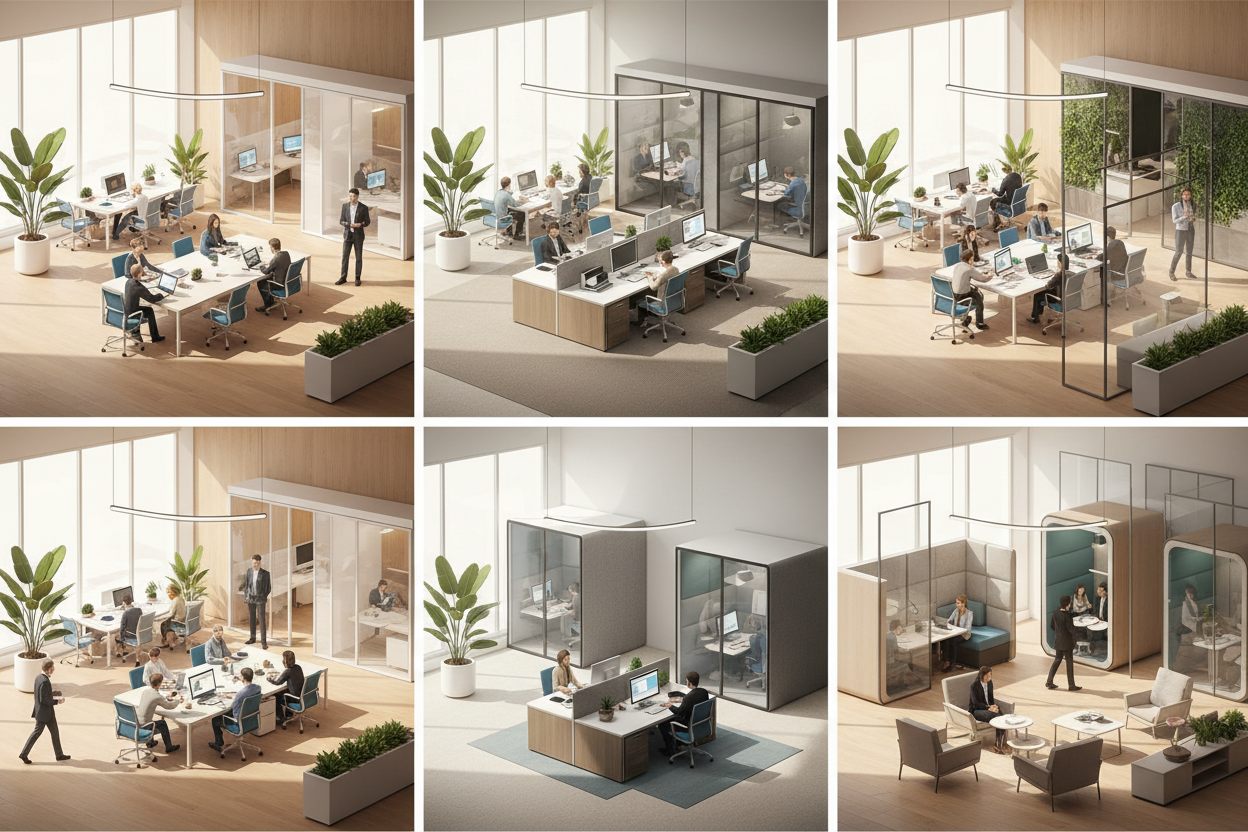
Office layouts shape more than just the physical workplace; they influence how teams collaborate, concentrate, and interact daily. Choosing between open-plan, traditional, or hybrid office designs involves balancing factors like space efficiency, employee well-being, and the nature of work itself. This article offers a detailed comparison of these layouts, highlighting their distinct benefits and challenges to help Australian businesses make informed decisions that align with their culture and operational goals.
Understanding Office Layouts: Open Plan, Traditional, and Hybrid
Open-plan office layouts eliminate walls and partitions, creating expansive open spaces with shared desks and collaborative zones. Traditional offices typically feature private offices, cubicles, and enclosed rooms, prioritising privacy and focus. Hybrid offices blend these approaches, combining open collaborative areas with private, quiet zones. The choice among these layouts significantly impacts workflow patterns, employee interaction, and organisational culture. This article compares these three configurations to provide clarity on their practical advantages and shortcomings within Australian work environments.
What Is an Open Plan Office Layout?
Open plan offices remove physical barriers like walls and cubicles, fostering a large, open workspace where employees sit in shared desks or flexible seating arrangements. This design often includes collaborative zones and common areas designed to boost teamwork. Historically gaining momentum in the late 20th century, open office design became popular for encouraging transparency and breaking down hierarchical walls. Today, many Australian businesses appreciate open-plan offices for promoting open communication and dynamic teamwork across flexible office spaces.
Advantages of Open Plan Offices
The primary strength of open plan offices lies in enhanced collaboration and seamless communication, as employees easily exchange ideas within shared workspaces. These layouts also offer cost-effectiveness and space efficiency by maximising usable area, reducing the need for extensive private rooms. Open offices allow for rapid reconfiguration, often utilising modular furniture that supports evolving business needs and fluctuating team sizes. Beyond functionality, open designs can raise employee morale through a sense of inclusivity, while fostering innovation by enabling spontaneous team interactions in common areas and collaborative zones.
Challenges and Drawbacks of Open Plan Offices
Despite their benefits, open-plan offices frequently struggle with noise distractions that impair focused work. The lack of privacy can hinder confidential conversations and create concern over information security. Employee well-being may be affected by overstimulation and difficulty finding quiet moments, resulting in potential burnout or reduced satisfaction. To counter these challenges, many offices incorporate acoustic panels, privacy screens, and designated quiet zones or private rooms, striving to balance openness with necessary privacy and focus.
What Is a Traditional Office Layout?
Traditional office layouts prioritise enclosed spaces such as private offices, cubicles, and conference rooms. This design supports privacy, focused work, and a professional environment where confidentiality and concentration are essential. Historically favoured by industries handling sensitive information, traditional layouts emphasise clear boundaries and individual workspace personalization, often reflecting a structured organisational hierarchy.
Advantages of Traditional Office Layouts
Traditional offices excel at providing privacy and controlling noise levels, which helps employees concentrate on demanding or confidential tasks. They create an environment perceived as professional and authoritative, reinforcing organisational structure. Additionally, private offices allow employees to personalise their spaces, potentially boosting satisfaction and comfort. These factors combine to support work styles that require deep focus or discretion, such as legal, financial, or executive functions.
Drawbacks of Traditional Offices
Traditional layouts can inhibit spontaneous collaboration and open communication, often isolating staff and forming silos across departments. Construction and maintenance costs tend to be higher due to the need for walls, doors, and separate HVAC systems. This design also lacks flexibility, making it difficult to adapt the office plan quickly as business needs evolve. Moreover, employees working in isolated offices may experience decreased interaction, which can impact team cohesion and innovation.
Hybrid Office Layouts: Combining the Best of Both Worlds
Hybrid office layouts blend open collaborative spaces with private, enclosed zones for focused work. Designed to accommodate diverse work styles and varying business demands, hybrid models offer both social engagement and concentration areas. They often feature flexible, modular furniture and soundproof rooms, enabling teams to customise spaces depending on current projects. This layout supports employee autonomy, offers efficient use of space, and adapts to shifting workforce patterns, making it increasingly popular in modern Australian workplaces.
Key Factors to Consider When Choosing an Office Layout
Selecting an office layout requires careful assessment of specific business needs, including the intensity of collaboration and confidentiality demands. Workforce preferences and predominant work styles—whether team-based or individually focused—are equally crucial. Employee well-being factors such as noise control, privacy, and workspace comfort heavily influence satisfaction and productivity. Furthermore, practical considerations such as cost-effectiveness, available office space, and scalability must be balanced to choose a layout that optimally supports growth without compromising culture or efficiency.
Best Practices for Implementing an Open Plan Office
Successful open plan offices begin with assessing the unique workspace requirements of teams and involving employees in the design process to address real needs. Incorporating acoustic panels and establishing quiet zones help manage noise, while modular, movable furniture allows easy reconfiguration and space optimisation. Establishing workplace guidelines to manage noise levels and respect privacy promotes a culture where open communication thrives without overwhelming individuals seeking focus. These strategies collectively enhance both the functional and social aspects of open office spaces.
How Technology Supports Open Plan and Hybrid Offices
Technology plays a critical role in optimising space usage in open and hybrid offices. Desk booking and space management apps enable flexible seating arrangements and allow employees to reserve quiet rooms or collaborative zones seamlessly. Integration of sound masking systems reduces noise distractions, while digital communication platforms facilitate efficient team collaboration regardless of physical layout. These tools help businesses maximise office layout efficiency and enhance employee satisfaction through smoother day-to-day operations.
Open Plan Office Design Trends for 2026
Emerging trends in open plan design for 2026 emphasise biophilic elements that connect employees with nature, enhancing well-being and reducing stress. Flexible furniture and modular partitions enable scalable layouts that easily adapt to future changes. Hybrid models continue to gain traction, with clear delineation of quiet zones and collaborative spaces providing a balanced work environment. Smart technology integration offers real-time space optimisation and health safety monitoring, meeting evolving workforce expectations in Australian offices.
Frequently Asked Questions About Open Plan Offices
What is an Open Plan Office?
An open plan office is a workspace design that removes walls and cubicles, creating a large, shared environment with flexible seating and collaborative zones. It encourages transparency and teamwork across various departments.
How Do Open Plan Offices Affect Productivity?
Open plan offices enhance collaboration and communication but can introduce distractions that affect focus. Productivity depends on managing noise and privacy while leveraging open spaces for teamwork.
How Can Noise Be Managed in Open Offices?
Effective noise management includes using acoustic panels, sound masking systems, privacy screens, and designated quiet zones to create pockets of focus within open spaces.
What Are the Benefits of Hybrid Office Layouts?
Hybrid layouts combine the openness of collaborative zones with private spaces, accommodating varied work styles, improving flexibility, and enhancing employee well-being by balancing interaction and focus.