


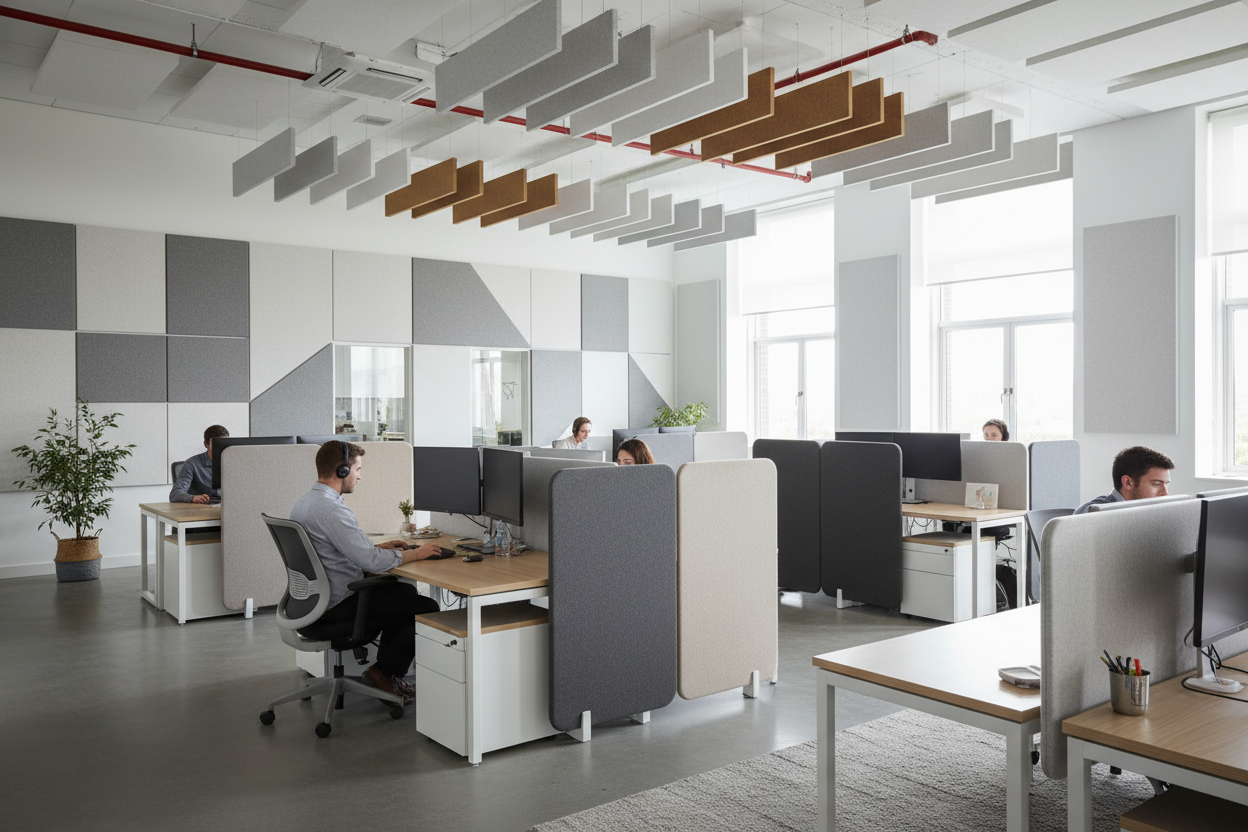
Open plan offices often promise collaboration and flexibility, but they can also usher in a barrage of distracting sounds—from ringing phones to overlapping conversations. These office noise challenges undermine focus and strain well-being, making it crucial to implement acoustic solutions tailored to such environments. Effective noise control strategies enable a more productive and comfortable workspace by creating balance between openness and acoustic comfort.
Understanding Office Noise and Its Impact on Productivity
Typical office noise in open plan offices includes chatter, phone calls, typing, and footsteps, all of which blend into a constant ambient hum. This background noise reduces concentration, increases stress, and impairs communication, diminishing overall productivity. Addressing these sound challenges through thoughtful acoustic design helps preserve focus, enhances employee well-being, and supports efficient workflows.
Key Acoustic Solutions to Manage Office Noise
Managing office noise effectively combines acoustic panels, specially designed furniture, strategic office layouts, and sound masking systems. Each solution tackles different aspects of sound control, from absorption to diffusion and masking. Integrating these techniques yields better noise reduction than relying on a single method, setting the stage for a quieter, more focused open plan office environment.
Acoustic Panels: The Foundation of Sound Absorption
Acoustic panels absorb sound waves, significantly reducing reverberation and echo within open office spaces. Placing these panels in areas with hard surfaces or near noise sources maximises their impact. Available in various materials and customisable designs, acoustic panels blend with office aesthetics while enhancing speech clarity and minimising distractions, making them essential for effective sound absorption.
Soft Furnishing and Furniture with Acoustic Properties
Soft furnishings such as upholstered chairs, couches, and curtains absorb sound reflections, softening the acoustic environment. Arranging furniture strategically creates physical barriers that interrupt sound travel, further controlling noise. Choosing furniture engineered with acoustic features combines noise reduction with comfort and design appeal, contributing both functionally and visually to quieter office spaces.
Strategic Office Layout and Quiet Zones
Office layout profoundly influences how noise disperses and affects employee focus. Designating quiet zones for concentrated work and zoning areas according to their typical noise levels allows employees to choose spaces fitting their tasks. Positioning noisy amenities, like printers or break areas, away from workstations reduces distractions and supports a noise-conscious office culture.
Flooring Solutions to Reduce Noise Impact
Hard flooring tends to amplify noise by reflecting sounds throughout a room. Introducing carpeting or sound-absorbing floor materials curtails this reverberation effectively. Using rugs or modular carpet tiles in the busiest areas offers a budget-friendly method to reduce ambient noise while enhancing underfoot comfort and overall acoustic performance.
Ceiling Treatments and Acoustic Baffles
Ceilings can reflect and magnify office noise, contributing to elevated ambient sound levels. Acoustic ceiling panels and baffles intercept these reflections, absorbing unwanted noise without disrupting design elements. Discreet ceiling solutions maintain the office’s visual flow while noticeably improving acoustic comfort for occupants.
Sound Masking Systems: Creating Balanced Acoustic Environments
Sound masking introduces unobtrusive background noise to cover sudden or distracting sounds, promoting speech privacy and lowering perceived disturbances. Common in open plan offices, these systems use carefully calibrated ambient sounds that help mask conversations, phone rings, and other interruptions—enhancing employee concentration and confidentiality in communal spaces.
Using Acoustic Screens and Partitions to Manage Noise
Acoustic screens come in desk-mounted, freestanding, and wrap-around styles, providing flexible options for dividing space visually and acoustically. By creating physical separation, these partitions interrupt sound transmission and help customise privacy levels. Selecting the right screens depends on the office layout and the privacy needs of its users, with easy installation enhancing adaptability.
Acoustic Furniture Pods and Enclosed Quiet Spaces
Pods and booths deliver highly soundproofed areas suitable for calls or focused tasks, incorporating sound-absorbing walls and sealed doors. They complement broader acoustic strategies by offering retreats from the open plan bustle. Their adaptable designs fit seamlessly into modern offices, providing flexible spaces for quiet work without sacrificing openness.
Choosing the Right Acoustic Solutions for Your Office
Office size, noise sources, budget constraints, and design preferences shape the best combination of acoustic solutions. Balancing panels, furniture, layouts, and masking achieves optimal noise reduction tailored to specific needs. Engaging professional acoustic consultants can yield customised strategies, and regularly evaluating effectiveness ensures improvements stay aligned with evolving office dynamics.
Encouraging a Noise-Conscious Culture
Employee behaviour directly impacts noise levels, so fostering etiquette—like holding calls in designated zones or using headphones—reduces disruptions. Leadership should champion awareness to embed respect for quiet into everyday office life. A shared noise-conscious culture underpins long-lasting acoustic comfort, reinforcing productivity and workplace satisfaction.
Maintaining Acoustic Solutions for Long-Term Office Comfort
Regular cleaning and maintenance of acoustic panels, furniture, and flooring preserve effectiveness and appearance. Reassessing noise levels periodically helps identify when adjustments are needed, particularly as office layouts or occupancy change. Inviting employee feedback ensures solutions continue to meet user needs and support a comfortable, productive acoustic environment.
Optimising Acoustic Comfort in Open Plan Offices
Successful noise management in open plan offices demands a thoughtful combination of acoustic panels, specialised furniture, strategic zoning, and sound masking systems. Complementing these with appropriate flooring and ceiling treatments creates a layered approach to noise control. Encouraging noise-aware behaviours and maintaining solutions over time ensures a balanced workspace where collaboration and focus coexist harmoniously, enhancing productivity and employee well-being.