


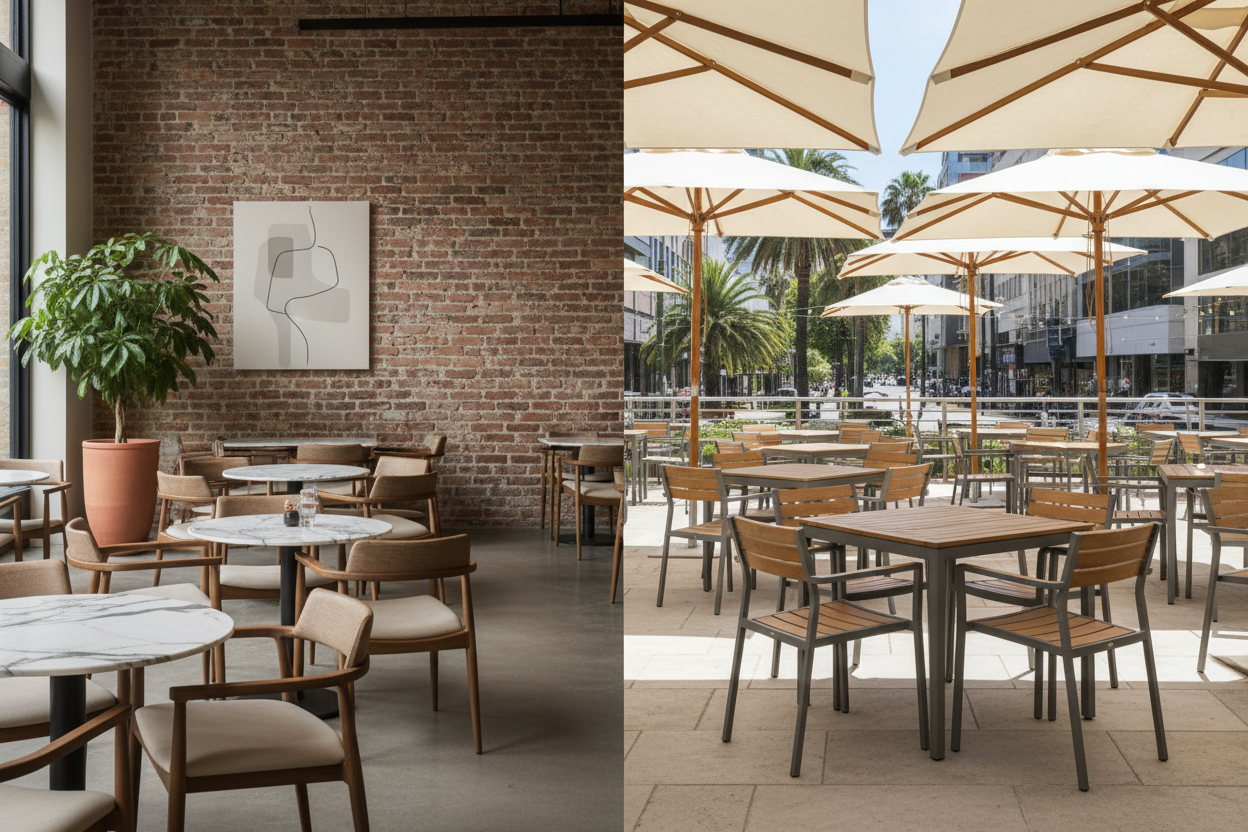
Direct Answer: Indoor vs. Outdoor Cafe Furniture
The primary difference between indoor and outdoor commercial cafe furniture is UV stabilization, moisture sealing, and core material composition. Outdoor furniture utilizes UV-stabilized polypropylene, anodized aluminum, and compact laminate to withstand high Australian UV indexes and coastal salt, averaging a 3–7 year lifespan. Indoor furniture utilizes solid timbers and steel, prioritizing aesthetic warmth and high-traffic durability, lasting 7–10+ years in climate-controlled environments.
1. The WA Climate Factor: Why Venue Zoning is Critical
Operating a hospitality venue in Western Australia means battling extreme summer UV indices and corrosive coastal salt air. While we supply commercial cafe furniture Australia-wide, our Perth-based clients know firsthand that specifying standard residential furniture or indoor-rated timber for an alfresco dining area leads to rapid structural failure.
Commercial venues must zone their furniture. Alfresco seating requires materials engineered for weather resistance, while indoor dining rooms can leverage sophisticated, heavier materials without the risk of environmental degradation.
2. Outdoor Cafe Furniture: Engineered for the Elements
Outdoor cafe furniture must survive a relentless cycle of direct sunlight, overnight moisture, and daily sanitation. The most reliable materials for alfresco and pavement dining include:
- UV-Stabilized Polypropylene: High-grade commercial plastics are injection-molded with UV inhibitors. This prevents the plastic from becoming brittle or chalky when left in the sun. Polypropylene cafe chairs are lightweight, 100% waterproof, and easily stackable for end-of-day pack downs.
- Anodized Aluminum: Unlike standard steel (which will inevitably rust in coastal areas like Fremantle or Cottesloe), aluminum naturally resists corrosion. The anodizing process hardens the surface, making it scratch-resistant and incredibly light for staff to move.
- Compact Laminate (Alfresco Tops): For outdoor cafe tables, compact laminate is the gold standard. It is manufactured under high pressure to create a completely sealed, non-porous core that resists warping, spills, and intense heat.
3. Indoor Cafe Furniture: Warmth and Heavy-Duty Traffic
Freed from the constraints of weatherproofing, indoor furniture prioritizes aesthetics, brand alignment, and the ability to withstand thousands of seated hours.
- Solid Timbers and Veneers: Timber brings unparalleled warmth to a dining room. Products like American Oak table tops are highly sought after for premium indoor fitouts. However, they are strictly for climate-controlled spaces, as temperature fluctuations and direct rain will cause the grain to split and warp.
- Powder-Coated Steel Bases: Heavy cast iron or powder-coated steel table bases offer maximum anti-wobble stability. Because they are kept indoors, they are protected from the rust-inducing moisture of morning dew.
4. The 2026 Material Lifespan & Capability Matrix
Use the data matrix below to match the correct material to your venue’s specific zones. (Note: Commercial lifespans assume standard daily use and proper adherence to manufacturer cleaning guidelines).
| Material Type | Primary Venue Zone | UV / Rust Resistance | WHS Handling (Agility) | Expected Commercial Lifespan |
|---|---|---|---|---|
| UV Polypropylene | Outdoor / Alfresco | High / 100% Rust-Proof | Excellent (Stackable, Lightweight) | 3 – 5 Years |
| Anodized Aluminum | Outdoor / Alfresco | High / High | Excellent (Stackable) | 5 – 7 Years |
| Compact Laminate | Hybrid (Indoor/Outdoor) | High / High | Moderate (Heavy table tops) | 7 – 10 Years |
| Solid Timber (Oak) | Strictly Indoor | Low / N/A | Low (Fixed layouts) | 7 – 10+ Years |
| Powder-Coated Steel | Strictly Indoor | Moderate / Low (If scratched) | Low (Heavy lifting required) | 10+ Years |
5. WHS Compliance and Venue Operations
Beyond material longevity, venue owners must consider Australian Work Health and Safety (WHS) regulations when purchasing furniture. Street-facing cafes often need to bring outdoor furniture inside every night for security or council compliance.
If your staff are moving furniture daily, specifying lightweight, stackable outdoor chairs is a mandatory WHS safeguard to prevent heavy lifting injuries. Heavy timber or cast-iron setups should be strictly reserved for fixed indoor floorplans. Additionally, when mapping out your table placements, ensure you maintain a minimum 1200mm walkway clearance to accommodate wheelchairs, prams, and busy waitstaff, aligning with local DDA (Disability Discrimination Act) accessibility codes.
Upgrading Your Venue in 2026
Replacing faded, wobbly, or mismatched furniture is the fastest way to elevate your venue’s brand perception and increase customer dwell time. Whether you are outfitting a new high-end restaurant in the CBD or refreshing a coastal cafe patio, selecting the right materials guarantees a strong return on your investment.
Ready to map out your venue's floorplan? Browse our complete, commercial-grade hospitality inventory online, or Contact Us to speak directly with the McLernons Business Base team in Perth to secure volume pricing and national freight logistics for your next fitout.