


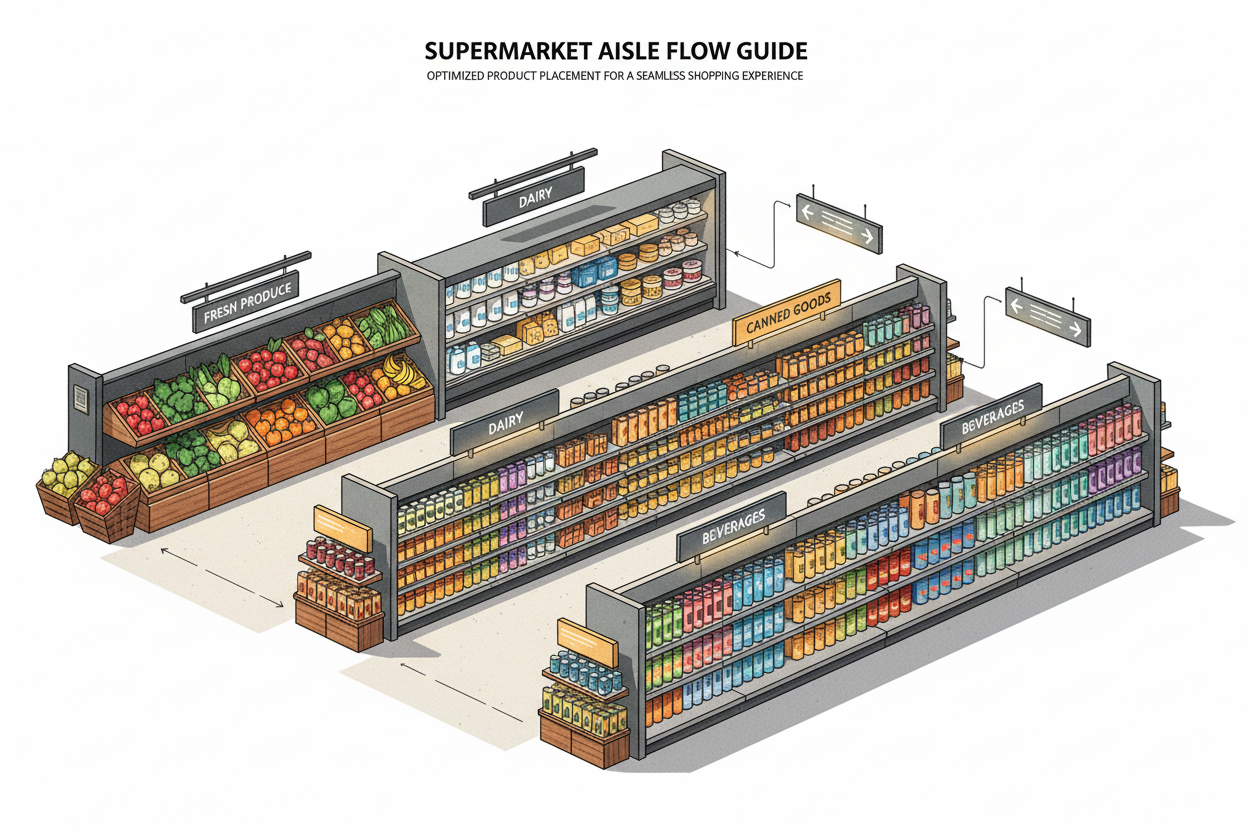
The most effective supermarket and grocery store shelving layouts utilize modular gondola systems configured in a rigid grid to maximize floor space and control customer flow. An optimized layout requires double-sided aisles for high-density dry goods, strategic end-caps for high-margin promotional items, and a minimum aisle clearance of 1200mm to accommodate safe two-way shopping trolley traffic.
1. The Core Infrastructure: Gondola Shelving The architectural foundation of any grocery layout is the freestanding gondola unit. Unlike static warehouse racking, gondolas are engineered specifically for retail flexibility and high-turnover merchandising.
-
Modularity: Featuring slotted uprights, shelving heights can be adjusted in precise increments (typically 25mm to 50mm) to accommodate different FMCG (Fast-Moving Consumer Goods) packaging sizes, eliminating dead vertical space.
-
Backing Panels: Systems can be customized with solid steel panels for heavy goods, or pegboard/slatwall backings to hang blister-packaged items directly within the primary aisle flow.
2. Traffic Flow and Planogram Geometry Retail shelving is not just about storage; it is about directing consumer behavior. The standard "Grid Layout" is the most profitable configuration for supermarkets because it maximizes inventory exposure.
-
The Counter-Clockwise Rule: Retail data consistently shows that customers naturally veer right and navigate counter-clockwise. Place your highest-margin or highest-demand fresh items on the right-side perimeter wall bays to anchor the shopping journey.
-
Aisle Width Clearances: Australian retail design dictates a minimum aisle width of 1200mm. However, high-traffic supermarkets should expand this to 1500mm–1800mm to allow two standard shopping trolleys to pass comfortably without causing congestion that deters lingering and browsing.
3. The Retail Merchandising Matrix
4. Weight Capacities and WHS Considerations Supermarket shelving must handle highly concentrated loads, particularly in the beverage and pet food aisles.
-
Load Stratification: Always deploy heavy-duty supermarket shelving where the base shelf is rated for a Uniformly Distributed Load (UDL) of 150kg or higher.
-
Center of Gravity: Heavy liquids and bulk items must be merchandised strictly on the bottom base shelf to lower the bay’s center of gravity. Upper shelves should be reserved for lighter, packaged goods to prevent tipping hazards and ensure WHS compliance.
Executing Your Store Fitout A highly profitable supermarket layout balances maximum stock density with seamless customer navigation. Whether you are outfitting a boutique grocer or a large-scale independent supermarket, utilizing professional-grade shelving and racking ensures your store remains safe, organized, and adaptable to changing retail trends.
For custom space planning, volume pricing on gondola systems, or immediate technical assistance, visit our Contact Us page to speak directly with the McLernons commercial fitout team.